
How Plug-In Solar Works
Typical users save £100–£130 per year
What is Plug-In Solar? The Simple Version
A plug-in solar panel system sometimes called a balcony solar system or micro-inverter system is a unit that generates electricity from sunlight and feeds it directly into your home through a standard plug socket.
You don’t need to rewire anything. You don’t need an electrician. You just plug it in, and it starts working.
What is Plug-In Solar? The Technical Version
Inside each kit are solar panels, a microinverter and the cables that connect the panels to the microinverter, and a cable to connect the microinverter to your plug socket.
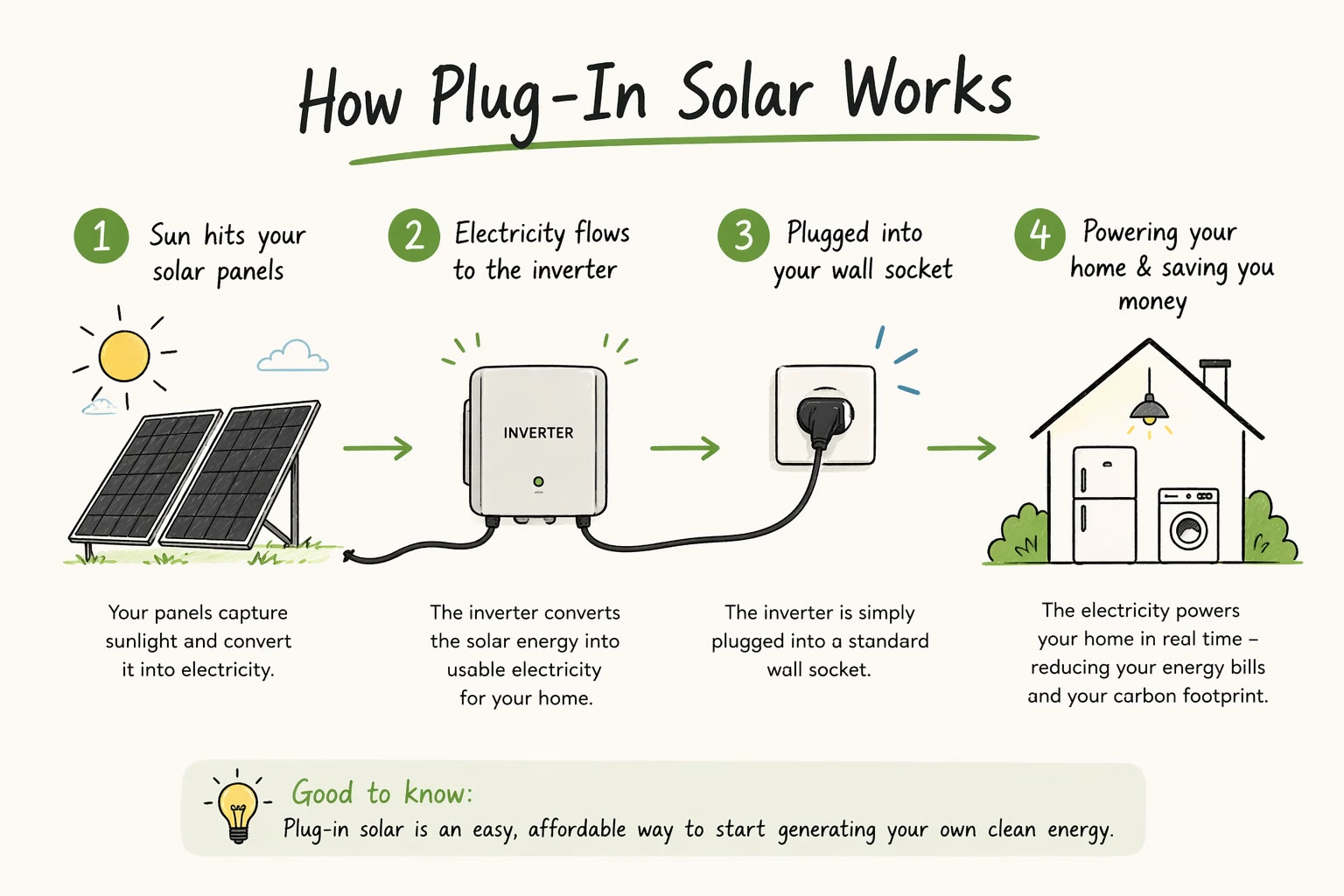
Here’s what happens step by step:
- The solar panel absorbs sunlight and produces DC (direct current) electricity the current type that comes from an AA battery.
- The microinverter converts that DC electricity into AC (alternating current) the same type your appliances use and in your home.
- The AC electricity flows through the UK plug cable into your home’s mains circuit.
- Your home uses this free solar power first, before drawing from the grid.
- Any power you don’t use flows back toward your meter, slowing it down (or even running it backwards on older analogue meters).
What Equipment Is Included?
- Two 400W or more monocrystalline solar panels
- A microinverter
- 4 panel to inverter leads
- A 5-metre connection cable with UK plug
- Quick-start guide
Where Can I Install It?
Plug-in solar works best in:
- South, south-east, or south-west facing gardens
- Flat roofs or shed roofs (with appropriate mounts)
- Balconies and terraces
- Garages with a south-facing roof pitch
The panel does not need to be perfectly angled or positioned to generate savings. Even east or west facing installations generate 60–70% of optimal output.
Is It Safe?
Yes. Our systems:
- Comply with UK electrical safety standards
- Include automatic shutdown if wires are cut or the device is disconnected from the grid
- Are CE and UKCA marked
- Use weatherproof outdoor-rated cables and connectors
The cable carries mains voltage only after the microinverter the panel to inverter section carries low voltage DC. The system cannot export power if it’s disconnected from the grid or any wires are cut. A. red light shows on the inverter if it is disconnected, green if it is sending power to your home.
How Much Will I Generate?
A single 400W panel in the UK typically generates 300–400 kWh per year allowing for low production in winter months and cloudy days. At current electricity prices of around 24p/kWh, that’s £72–£96 in savings annually from one panel alone sometimes more with favourable positioning.
Use our savings calculator to get a personalised estimate based on your postcode and installation spot.
Is It Legal?
Yes. In the UK, plug-in solar systems are legal under the G98 connection standard, which allows systems upto 800w to connect to the grid without prior approval from your Distribution Network Operator (DNO). However, you should notify your DNO within 28 days of installation we include a simple template letter to make this easy and say who you need to sent it to.
You also don’t need planning permission for most ground or balcony installations. See our full regulations page for details.
How much could you save?
£70–£150 Year
The average UK household saves £150 per year with a double panel starter kit, more if you have a south facing roof or garden. Our savings calculator shows your personalised estimate in 30 seconds.